Submitted by: Dr. Kyra Caldwell Templeton, Program Director of Student Engagement and Co-Advisor of the APS Student Advisory Council (SAC)
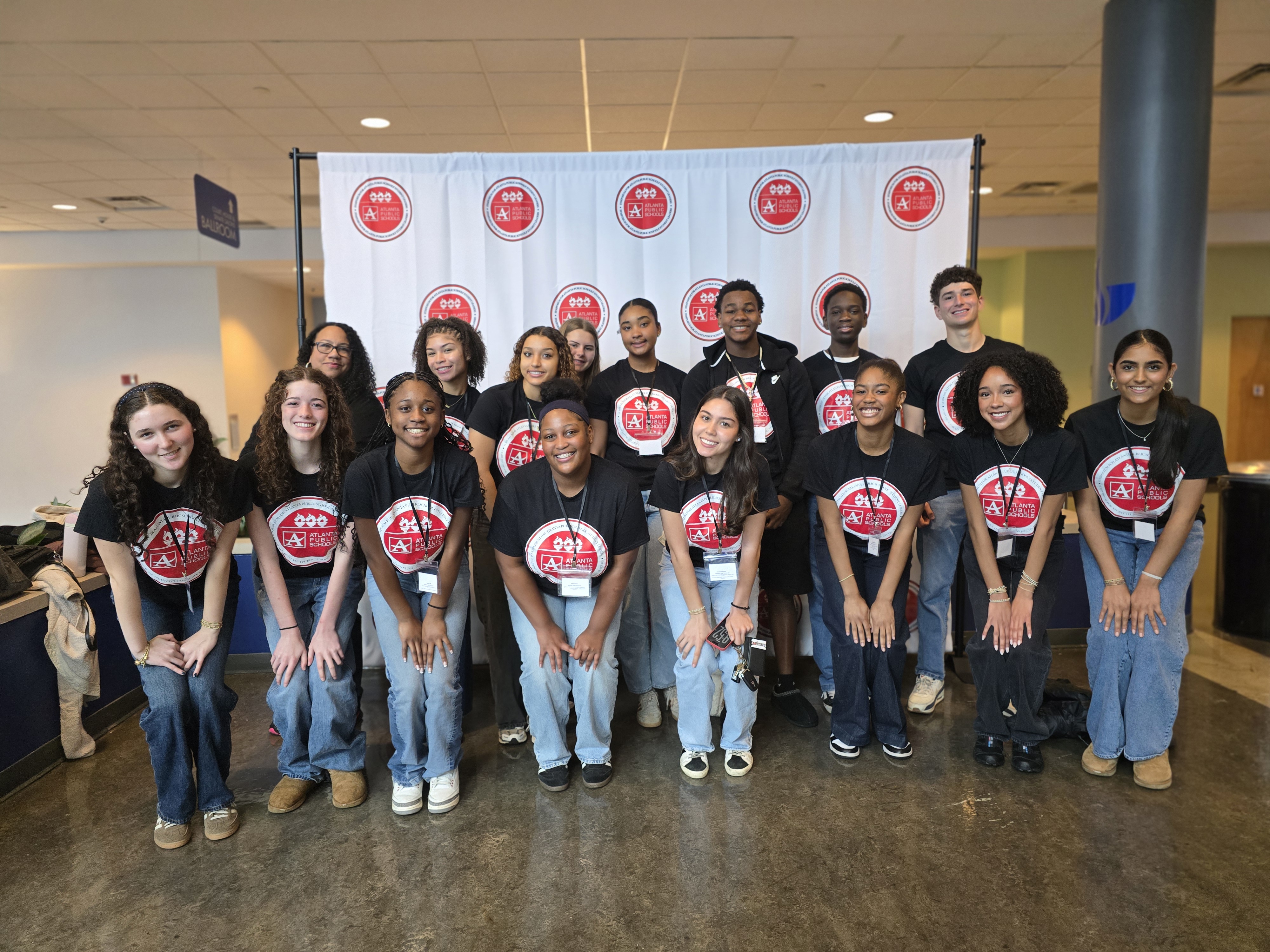
Atlanta Public Schools hosted the 2026 Student Leader Symposium at Georgia State University on Friday, Feb. 27 under the theme, “The Future We Imagine: Redefining What’s Possible.” Designed as a student-led and student-co-created experience, the symposium brought together student leaders from across the district for a day centered on civic dialogue, leadership development, and future-focused planning.
From the moment students arrived, the tone was clear—this was not an event created for students, but one built with and by them.
Emceed by Laila Shannon, APS Student Advisory Council (SAC) chair and senior at Drew Charter School, the morning opened with remarks from Georgia State University Student Government Association (SGA) leaders, followed by greetings from Mayor Andre Dickens, Superintendent Dr. Bryan Johnson, and Atlanta Board of Education Chair Jessica Johnson. Each speaker emphasized the importance of student leadership, civic engagement, and partnership.
Their presence reinforced a powerful message: student voice is not supplemental to district progress; it is essential to it.
“I had a great time at the symposium,” said Taylor Harper, a senior at Drew Charter School and SAC member. “I had so much fun with my peers and I will take all of the knowledge I learned today into my future SGA meetings.”

One of the most impactful moments of the day was the keynote alumni panel, “APS to the World: Lessons from Alumni.” Former Student Advisory Council delegates reflected on how their experiences in APS shaped their confidence, academic pathways, and leadership journeys beyond high school. Facilitated by North Atlanta High School sophomore John Henry Collins, an active SAC delegate, the panel modeled cross-generational student leadership and offered tangible examples of what is possible when students are empowered early.
Throughout the day, students engaged in breakout sessions across five strands: Advocacy & Voice – Shaping the Future, Leadership in Action – Power & Balance, Pathways & Possibilities – Preparing for the Future, Empowering Adults – Supporting Student Leaders, and Community & Connection – Leading Together.
In advocacy-focused sessions, students explored what authentic student voice looks like inside decision-making spaces and learned practical strategies for organizing around issues that matter to them. In leadership sessions, participants unpacked time management, balance, and the realities of leading while maintaining wellness. Governance-focused workshops demystified how student government associations operate, how to run effective meetings, and how to lead initiatives with influence. Career and pathways sessions helped students identify transferable skills, explore postsecondary options, and clarify next steps toward college and career goals. Meanwhile, adult advisors participated in sessions centered on strengths-based coaching and empowering students without overshadowing them.

Students were particularly engaged and excited as they amplified their voices during “All the Smoke: Fighting for What’s Right Inside & Beyond APS,” a session facilitated by Dr. Carina Windom, director of the Office of Equity + Social Justice, Brent Bailey, Coordinator of Supplier Diversity, and Janiya Outlaw, a senior at Carver Early College High School. The session was designed to help students understand what authentic advocacy looks like in their schools, communities, and civic spaces.
Utilizing the Engaging in Collective Action course framework from Cornell University, facilitators engaged students in interactive ice breakers and provided ways for them to organize collective action. They also shared powerful examples of ways APS students have demonstrated collective action, most notably in the form of organized school walkouts related to recent Immigration and Custom Enforcement (ICE) raids. Scholars also learned what they can do to create successful protests.
Dr. Rashida Askia, senior research associate in the Division of Strategy & Impact, collaborated with student leaders to co-develop the session, “Get Involved: Turning Passion into Purpose.” The session was designed to teach students how to identify community issues, join or launch initiatives, and build partnerships with local organizations to drive meaningful change.

“Co-developing a session that allowed APS scholars to hear the stories of individuals who turned their passion into purpose was an amazing experience,” Dr. Askia said. “While we often say that representation matters, the world does not always provide enough opportunities for students to see what representation looks like in real time.”
Post-event survey data confirmed the symposium’s strong impact. Approximately 97% of participants rated session content clarity a 4 or 5 out of 5. About 91% rated sessions a 4 or 5 for relevance, and 95% rated delivery a 4 or 5. The data reflects not only high satisfaction, but alignment between what students need and what was delivered.
“This changed my thoughts on certain topics and was very informative and helpful for me in the future,” said Aoki Kenny, a freshman at Carver Early College High School.
Equally important were students’ recommendations for future symposiums. Many requested deeper conversations around personal and mental health, youth psychology, and strategies for building confidence while balancing multiple responsibilities. There was strong interest in expanded college and career planning sessions, including scholarship access, internships, STEM careers, architecture, and entrepreneurship.
Students also expressed a desire for more governance-specific content, such as how bills are passed, how to draft advocacy letters, and how to effectively manage a council. Practical life skills such as financial literacy, budgeting, saving, credit, time management, and study strategies were frequently requested. Emerging interests included business ownership, artificial intelligence and technology, structured debates, and sessions focused on turning passion into purposeful action.


The 2026 Student Leader Symposium was supported by a cross-functional planning team of students, district leaders, and community partners. More than just an event, the symposium represented APS’s ongoing commitment to embedding authentic student voice into systems, structures, and strategy. Students were not symbolic participants; they were designers, facilitators, moderators, and visionaries. The future they imagine is innovative, equitable, and student-centered—and they are already leading the way.
Dr. Kyra Caldwell Templeton, program director of Student Engagement and co-advisor of the Student Advisory Council (SAC), helped organize the Student Leader Symposium and described it as a student-powered event.
“From the theme and session topic selections, to the panel facilitation, students were the focus,” she said. “We hope that this symposium truly inspired our future leaders to action.”


Discover more from APS Today
Subscribe to get the latest posts sent to your email.